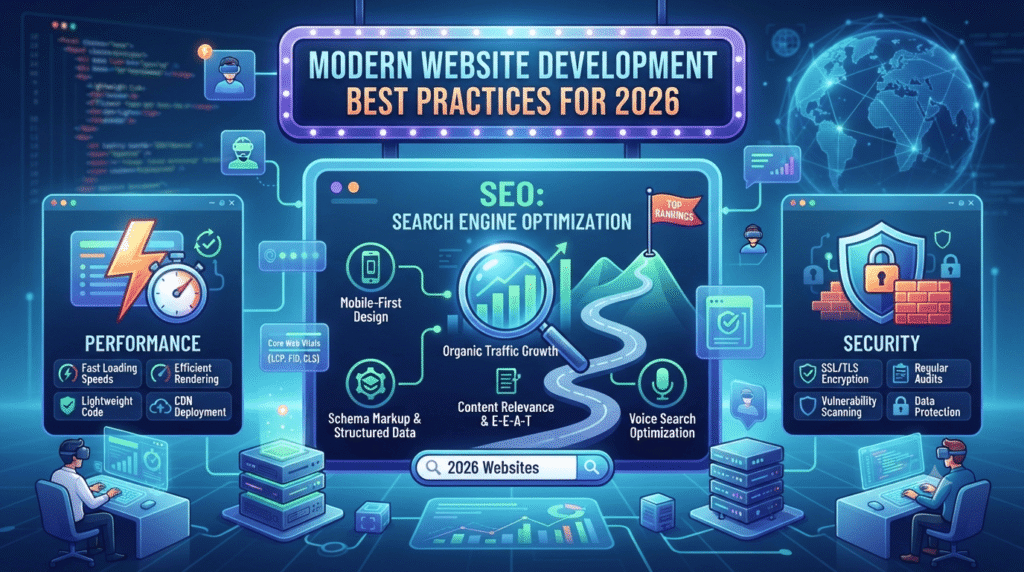
In 2026, a successful website needs to be more than visually attractive. Users expect websites to be fast, secure, mobile-friendly, responsive, and easy to use. Search engines also consider technical quality, page experience, content relevance, and website accessibility when evaluating websites.
Whether you are creating a business website, ecommerce website, WordPress website, portfolio, SaaS platform, or web application, following modern website development best practices can improve user experience, search visibility, conversions, and security.
In this guide, we will discuss the most important web development best practices for 2026, including performance optimization, security, technical SEO, mobile-first development, accessibility, and website maintenance.
Why Website Development Best Practices Matter in 2026
A modern website should provide a smooth experience across smartphones, tablets, and desktop computers. A slow website can frustrate visitors, while poor security can put users and business data at risk.
The main goals of modern website development should be:
- Fast page loading
- Mobile responsiveness
- Strong security
- SEO-friendly architecture
- Easy navigation
- Accessibility
- Clean and maintainable code
- Scalability
- Reliable performance
Developers should consider these factors from the beginning rather than trying to fix problems after launching the website.
1. Follow a Mobile-First Development Approach
Mobile-first web development is one of the most important practices in 2026. Instead of designing only for desktop screens and adapting the website later, developers should prioritize smaller screens first.
A responsive website should automatically adapt to different screen sizes.
Important Mobile Optimization Practices
Make sure your website has:
- Responsive layouts
- Touch-friendly buttons
- Readable fonts
- Simple navigation
- Optimized images
- Fast loading times
- Mobile-friendly forms
A good responsive web design ensures that visitors can use your website comfortably regardless of their device.
2. Focus on Website Performance
Website performance optimization directly affects user experience. Visitors are less likely to stay on a website if pages take too long to load.
Important performance metrics include Largest Contentful Paint (LCP), Interaction to Next Paint (INP), and Cumulative Layout Shift (CLS).
How to Improve Website Speed
Developers can improve performance by:
- Compressing images
- Using WebP or AVIF images
- Minifying CSS and JavaScript
- Removing unnecessary JavaScript
- Using browser caching
- Implementing lazy loading
- Reducing third-party scripts
- Using a CDN
- Optimizing server response time
Optimize Images
Large images can significantly increase page size. Resize and compress images before uploading them and use modern formats where appropriate.
Good image optimization improves both website speed and user experience.
3. Implement Strong Website Security
Website security should be part of development from the beginning.
Websites can contain sensitive information such as customer details, passwords, payment information, and business data.
Essential Website Security Practices
Use:
- HTTPS and SSL/TLS
- Secure authentication
- Password hashing
- Input validation
- API authentication
- Rate limiting
- Secure file uploads
- Regular dependency updates
- Database backups
Never trust user input. Forms, APIs, file uploads, and URL parameters should be properly validated.
Protect Your APIs
Modern applications frequently use APIs to communicate between frontend and backend systems. APIs should have proper authentication, authorization, validation, and error handling.
Secure API development helps reduce risks such as unauthorized access and data exposure.
4. Make Technical SEO Part of Development
Technical SEO should not be added after the website is completed. It should be included during development.
Search engines need to discover, crawl, understand, and index your pages.
Important SEO-friendly website development practices include:
- Clean URLs
- Proper heading structure
- Unique title tags
- Meta descriptions
- Canonical URLs
- XML sitemap
- Robots.txt
- Internal linking
- Structured data
- Mobile optimization
- Fast page speed
Create SEO-Friendly URLs
Use descriptive URLs such as:
/web-development-services
instead of:
/page?id=123
Clear URLs make it easier for users and search engines to understand the page.
5. Use Proper H1 to H6 Headings
A proper heading structure improves readability and helps search engines understand content hierarchy.
Use:
H2 for Major Sections
H3 for Subsections
H4 for Detailed Subsections
H5 for Additional Structure
H6 for Deep-Level Sections
The H1 heading should represent the primary topic of the page. Avoid using headings only to make text appear larger.
6. Create Helpful SEO Content
In 2026, SEO content writing should focus on satisfying search intent rather than keyword stuffing.
Use your primary keyword naturally along with related terms and long-tail keywords.
Primary Keyword
modern website development
Secondary Keywords
Use related keywords such as:
- website development best practices
- web development best practices 2026
- website performance optimization
- website security best practices
- technical SEO
- mobile-first web development
- responsive web design
- website speed optimization
- SEO-friendly website
Long-tail keywords can also help target specific searches, such as best website development practices in 2026 and how to make a website faster and more secure.
7. Improve Website Accessibility
A modern website should be usable by as many people as possible.
Use semantic HTML, keyboard navigation, accessible forms, readable typography, proper image alt text, and sufficient color contrast.
Use Semantic HTML
Elements such as <header>, <nav>, <main>, <section>, <article>, and <footer> provide meaningful structure.
Accessibility should be considered during development instead of being treated as an afterthought.
8. Optimize JavaScript and Third-Party Scripts
Too much JavaScript can negatively affect website performance.
Avoid unnecessary libraries, animations, tracking scripts, and third-party widgets.
For large applications, developers can use techniques such as:
- Code splitting
- Lazy loading
- Dynamic imports
- Minification
- Tree shaking
Only load resources that are actually required.
9. Use Caching and CDN
Caching allows frequently requested resources to be delivered faster.
Developers can use:
- Browser caching
- Server-side caching
- Application caching
- CDN caching
A Content Delivery Network (CDN) can serve static resources from locations closer to users, improving website loading performance.
10. Monitor and Maintain Your Website
Website development does not end when the website goes live.
Regular maintenance helps keep a website secure, fast, and reliable.
Monthly Website Maintenance Checklist
Check:
- Website uptime
- Broken links
- Security updates
- Page speed
- Search performance
- Server errors
- Database performance
- Forms and APIs
- Website backups
Regular SEO audits and performance testing can also identify issues before they negatively affect users.
Common Website Development Mistakes to Avoid
Some common mistakes include:
- Using huge uncompressed images
- Ignoring mobile users
- Installing unnecessary plugins
- Using too many third-party scripts
- Ignoring website security
- Keyword stuffing
- Poor heading structure
- Slow hosting
- Not updating dependencies
- Ignoring accessibility
- Not monitoring website errors
Avoiding these mistakes can create a faster and more reliable website.
Final Thoughts
The best modern website development strategy for 2026 combines performance, security, SEO, accessibility, and user experience.
A website should load quickly, work perfectly on mobile devices, protect user information, provide useful content, and make it easy for search engines to understand its pages.
Whether you are building a business website, WordPress website, ecommerce website, portfolio, or web application, implementing these website development best practices from the beginning can provide a strong foundation for long-term growth.
The goal is not simply to build a website. The goal is to build a fast, secure, accessible, scalable, and SEO-friendly website that delivers a better experience for both users and search engines.